
Mange on Dogs: Causes, Symptoms & Treatment (Vet Verified)

Is your dog scratching relentlessly even though you don’t see fleas? Your furry friend is probably suffering from mange, a skin condition caused by microscopic mites that cause intense itching, hair loss, and secondary infections. Mange on dogs is a common and treatable skin condition, but it requires immediate vet attention. And recognizing the symptoms as fast as possible is the key to a fast recovery.
This bet-backed guide will help you understand what canine mange is, its two main types, what are the symptoms, and the safest treatment options.
Key Takeaways
- Mange is caused by microscopic mites that infest a dog’s skin.
- The two main types are Sarcoptic Mange (highly contagious) and Demodectic Mange (not contagious).
- Intense itching is the hallmark symptom.
- Treating mange in dogs requires vet-prescribed oral, topical, or injectable anti-parasitic medications.
- Early detection of the symptoms using a pet health tracker is essential for quicker and effective treatment.
What Is Mange on Dogs?

Mange is a skin disease in dogs caused by an infestation of parasitic mites.
These mites are too small to see with the naked eye and live either just under the surface of the skin or within the hair follicles.
When the mites multiply, they cause skin irritation, inflammation, hair loss, and intense itchiness.
If left untreated, the severe scratching often leads to open sores, crusting, and secondary bacterial or yeast infections.
How Do Dogs Get Mange?
The method of transmission depends entirely on the type of mite involved:
Sarcoptic Mange
Sarcoptic mange, or canine scabies, is caused by the Sarcoptes scabiei mite. This form is highly contagious and spreads easily.
- Direct contact: the most common way is through close contact with an infested animal (in kennels, dog parks, or shelters, for example).
- Contaminated environments: mites can survive for a short period off a dog, meaning transmission can occur indirectly through shared bedding, grooming tools, or even contaminated outdoor environments.
“I got the Maven sensor for my 14-year-old Chihuahua mix with heart and trachea issues. It gave me back peace of mind – I can track her RRR, BPM, drinking, and activity anytime and know instantly if something’s wrong. Highly recommend!”

★★★★★
Chiara De Luca
Titti
Demodectic Mange
Demodectic mange is caused by the Demodex canis mite. This mite is a normal inhabitant of most dogs’ skin, and the condition is not considered contagious to other animals or people.
- Immune system suppression: demodectic mange only develops when a dog’s immune system is compromised. It is most common in puppies and adult dogs that suffer from systemic illnesses or take immune-suppressing medications.
- Mother to puppy: Demodex mites are passed from the mother to her puppies during nursing in the first few days of life, but it only causes disease if the puppy’s immune system is weak.
Dog Mange Symptoms: What to Look For
The signs of mange depend on the type and severity, but the most distinctive symptom is often the severity of the itching.
Other symptoms include:
- Hair loss (often starting on the face, ears, elbows, hocks (ankles), and abdomen).
- Red and irritated skin.
- Thick, yellowish crusts, especially on the edges of the ears.
- Thickened skin.
- Secondary infections (pus-filled bumps, foul odor, and oily dandruff.
How to Treat Mange in Dogs at Home (What’s Safe vs Unsafe)

What Is Safe to Do at Home
- Administer all prescribed medication exactly as directed by your vet.
- Clean and sanitize all bedding (hot wash cycle) to kill Sarcoptic mites and prevent re-infestation.
- Use E-collars (cones) or protective vests to prevent the dog from scratching/chewing the irritated skin.
What is to Avoid
- Using harsh or unproven folk remedies like motor oil, bleach, or hydrogen peroxide. These are toxic, cause severe chemical burns, and will not cure mange.
- Giving human over-the-counter itch medicine without vet approval.
- Stopping treatment early once symptoms improve. Mites and eggs must be killed throughout their entire life cycle, which often takes weeks.
When Mange Is an Emergency
Mange can become an emergency if a severe secondary infection develops or the dog’s overall health declines. Seek immediate vet care if your dog has any of the following symptoms:
- Widespread, oozing, or weeping sores that are getting worse.
- Lethargy, depression, or loss of appetite.
- Extreme pain when touching the affected skin.
- Fever.
How Maven Pet Helps Track Itching & Skin Irritation
“Mange often starts with increased scratching or hair loss in small patches. Monitoring these patterns helps catch the condition before it spreads.” — Carolina Domingues, DVM, Veterinarian at Maven Pet
The intense itching and restlessness associated with mange can be difficult to spot in its earliest stages.
A subtle increase in nighttime scratching can be the first clue. And this is where Maven Pet comes in.

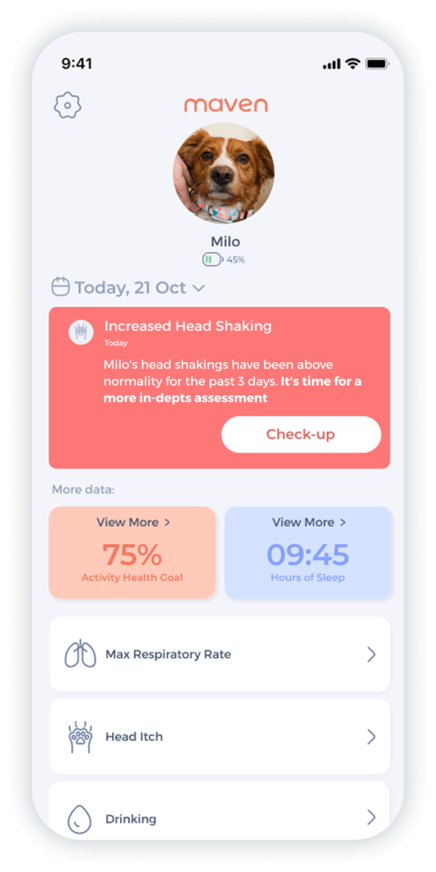
Monitor heart rate, respiratory rate, activity & rest, drinking, itch behavior.
The Maven Pet Health Monitor is a dog health tracker that helps you recognize these early behavioral changes. By continuously monitoring key metrics, Maven Pet helps you detect problems before they become severe:
- Increased scratching: Maven can track abnormal amounts of activity that indicate intense itching.
- Restlessness: mange-related discomfort often leads to an inability to settle down or get quality sleep, which the monitor can detect through changes in activity and sleep patterns.
- Activity changes: a significant change in daily activity or a new reluctance to play may signal pain or discomfort from skin inflammation.
- Changes in resting heart and breathing rates: in severe cases, pain or systemic illness from chronic infection can be reflected in abnormal vital signs.
By receiving alerts for these subtle shifts on your Maven’s pet health app, you can contact your vet sooner, preventing the condition from spiraling into a severe, chronic problem.
Takeaways Recap
- Mange on dogs is a stressful but treatable condition.
- The most important action you can take as a dog parent is to see your veterinarian immediately if you suspect mites, itching, or unexplained hair loss.
- Remember the difference: Sarcoptic Mange is contagious and requires environmental cleaning, while Demodectic Mange signals a possible underlying immune issue.
- Monitoring your dog’s behavior, like tracking scratching and restlessness with the Maven Pet Health Monitor, ensures you can intervene as early as possible for the quickest recovery.
Maven Pet focuses on improving the quality of life of our pets with technology, using artificial intelligence (AI) to enable proactive pet care. By accurately collecting and monitoring pet data 24/7 and flagging any irregularities, Maven Pet empowers pet parents and veterinarians to stay ahead of potential health issues, ensuring the well-being and longevity of our beloved companions.